
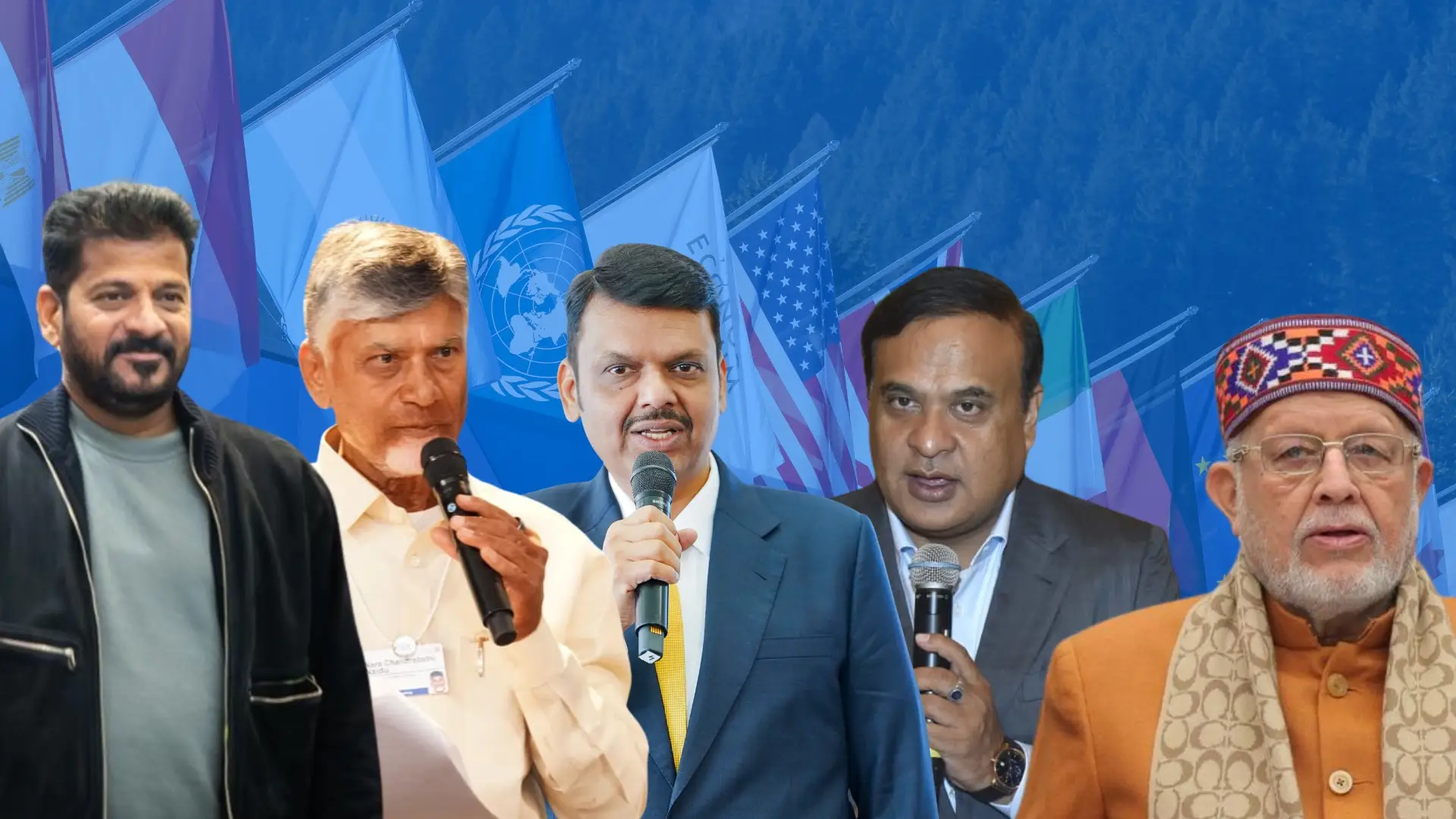
Indian chief ministers jetted off to Davos for the World Economic Forum 2026, but the splashy MoU signings with homegrown firms are drawing fire for missing the mark on real foreign investment.
Maharashtra signed 19 MoUs worth Rs 14.5 lakh crore, including Rs 6 lakh crore with Adani Group for data centers, renewables, and infra. Telangana, Andhra Pradesh, and Tamil Nadu also inked deals with Indian firms. Critics pounced: Why fly to Switzerland for “Indians meeting Indians”?
Uttar Pradesh secured MoUs over Rs 12,800 crore (and earlier Rs 9,750 crore) in green energy, AI, manufacturing, and defense. Assam flagged potential Rs 1 lakh crore MoUs in green energy and semiconductors.
Nine states total, including Karnataka, Gujarat, Jharkhand, Madhya Pradesh, and Kerala, pitched at the India Pavilion, but Maharashtra, UP, and southern states faced the sharpest flak.
Congress leaders like Rajeev Shukla and Jairam Ramesh slammed the moves as a “criminal waste” of taxpayer money, dubbing them showy photo-ops that could have happened in Mumbai or Borivali. Social media erupted with barbs “Is Mumbai traffic that bad?” questioning if these recycled announcements just pad headline numbers.
State governments push back, arguing Davos spotlights their pro-business vibe, clusters investor meets, and sparks competition to lure capital amid India’s 7.3% GDP glow. Yet the optics sting: Davos shines for global networking, not domestic handshakes.
As backlash builds, the real test lies in execution will these MoUs deliver jobs and growth, or fade as Davos flair? For now, India’s state leaders are defending a high-stakes PR pivot.