
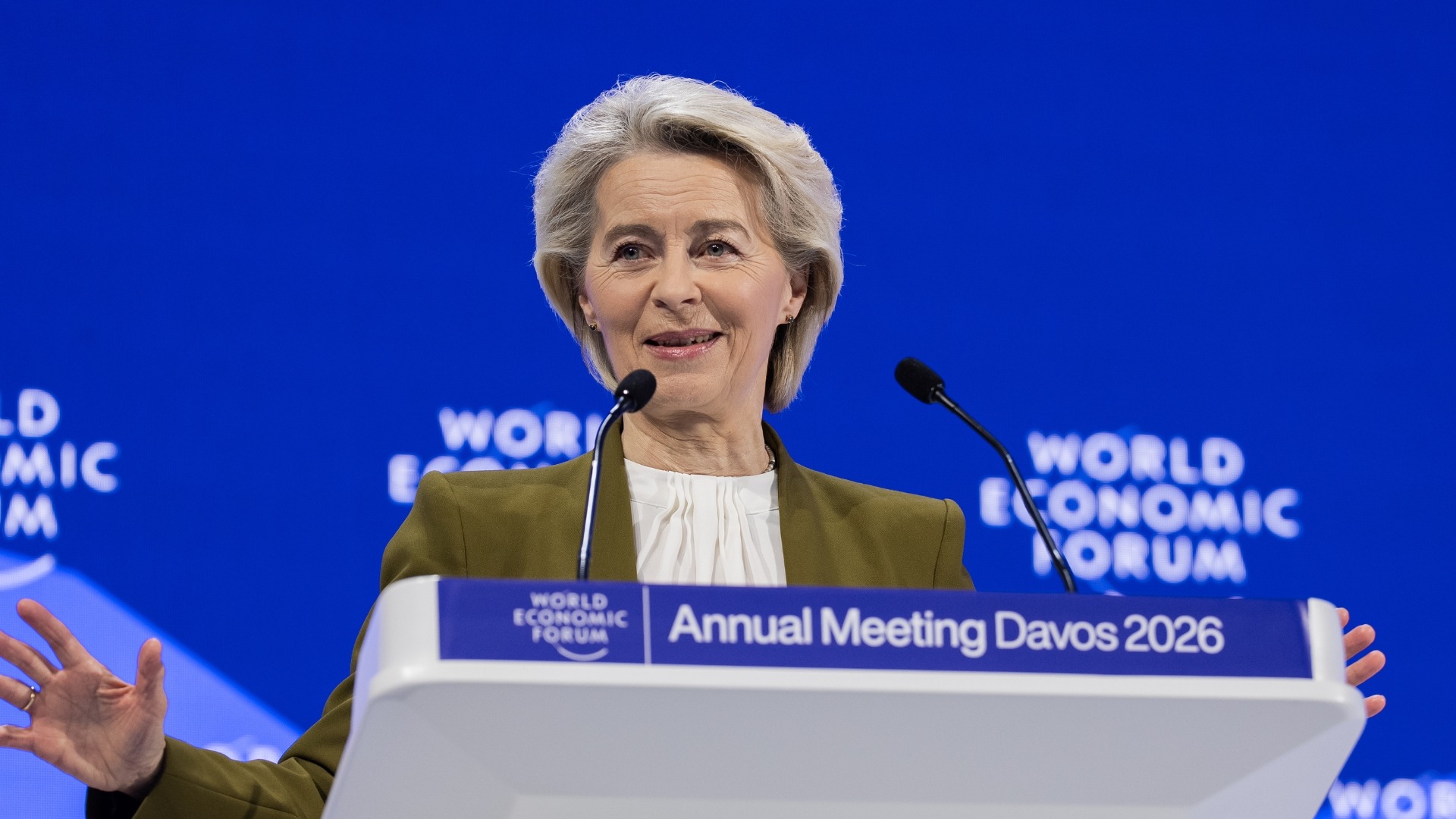
European Commission President Ursula von der Leyen declared the European Union and India “on the cusp” of a landmark free trade agreement, dubbing it the “mother of all deals” at the World Economic Forum in Davos.
In her January 20 speech, von der Leyen spotlighted the pact’s potential to unite 2 billion people nearly a quarter of global GDP amid India’s booming economy and Europe’s push for first-mover gains. Negotiations, revived in June 2022 after stalling in 2013, have propelled bilateral trade to €120 billion in 2024, up 90% over the past decade.
Von der Leyen and European Council President António Costa plan a Republic Day visit to India around January 25-27 to seal key elements, even as U.S. tariffs under President Trump loom large. India’s Commerce Minister Piyush Goyal had earlier hailed it as surpassing past FTAs.
The deal promises reshaped supply chains, plus looming defense and strategic pacts. Yet challenges persist, with final hurdles in ongoing talks. For Europe, it’s a strategic pivot; for India, a gateway to deeper global ties.