
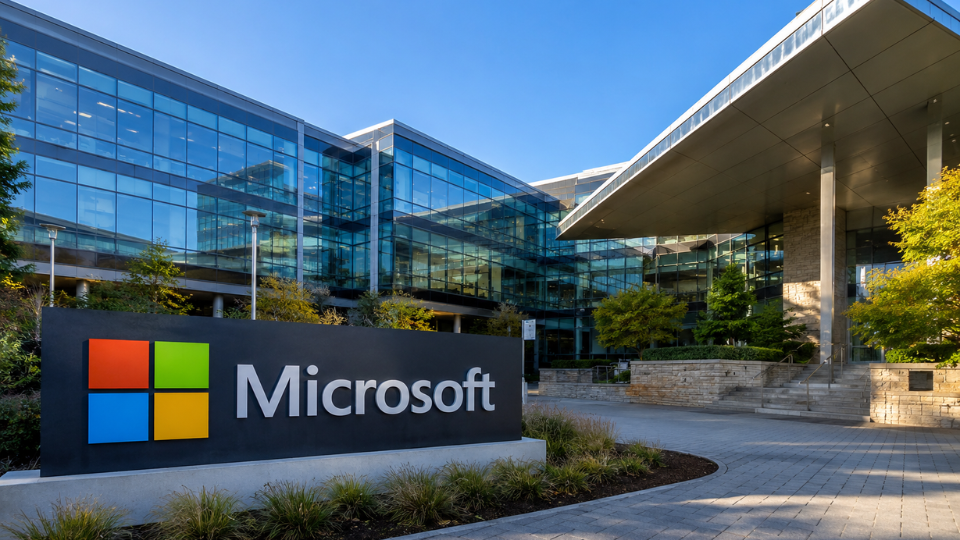
Microsoft is tightening internal access to Anthropic’s Claude Fable 5 AI system while its legal and compliance teams scrutinize the startup’s revised data retention rules. The move underscores how data governance and regulatory risk are increasingly shaping how large enterprises adopt third-party AI infrastructure.
Claude Fable 5 is Anthropic’s most advanced publicly available model, positioned for high-stakes enterprise workloads such as software engineering, analytics, and other complex knowledge tasks. Microsoft’s caution centers on how user prompts and generated outputs are captured and stored under Anthropic’s updated retention framework for its Mythos-class models.
Anthropic’s policy states that prompts and responses across supported platforms are retained for 30 days for trust and safety monitoring. If content is flagged by internal safety systems for potential policy violations, the related inputs and outputs may be archived for as long as two years, significantly extending the potential exposure window for sensitive data.
Against that backdrop, Microsoft has imposed temporary restrictions on employees’ use of Claude Fable 5. The curbs are designed to minimize the risk of unintentionally exposing confidential information, including customer records, internal business plans, and proprietary operational details. Until the review is complete, staff are being steered away from feeding sensitive material into the Anthropic model.
Microsoft’s legal and compliance teams are evaluating whether Claude Fable 5 can satisfy the company’s internal standards for data protection, regulatory alignment, and contractual safeguards. A favorable conclusion could clear the way for broader internal deployment, while a more conservative reading might lock in stricter, longer-term limits on how the model is used inside the company.
The decision lands soon after the debut of Fable 5, which builds on the earlier Mythos model. Mythos attracted industry attention for sophisticated cybersecurity features and its skill in surfacing software vulnerabilities, positioning Anthropic as a serious contender in security-focused AI applications.
Microsoft’s stance also reflects a broader strategy: invest heavily in in-house AI platforms, yet remain pragmatic about integrating external models when they provide differentiated capabilities. Internal demand for Claude Fable 5’s strengths in coding, analytics, and complex reasoning could still influence how flexible Microsoft ultimately becomes.
Anthropic, for its part, claims that Mythos 5 and Fable 5 outperform leading frontier systems such as GPT-5.5, Gemini 3.1 Pro, and Opus 4.8 across 13 benchmark categories. Those benchmarks span agentic coding, cybersecurity, and a range of knowledge-work tasks, signaling an intensifying race among frontier model providers to win enterprise workloads where data handling standards are as critical as raw performance.
Read Article: AWS Says AI-Generated Code Can Slow Software Teams, Citing Quality Over Speed