
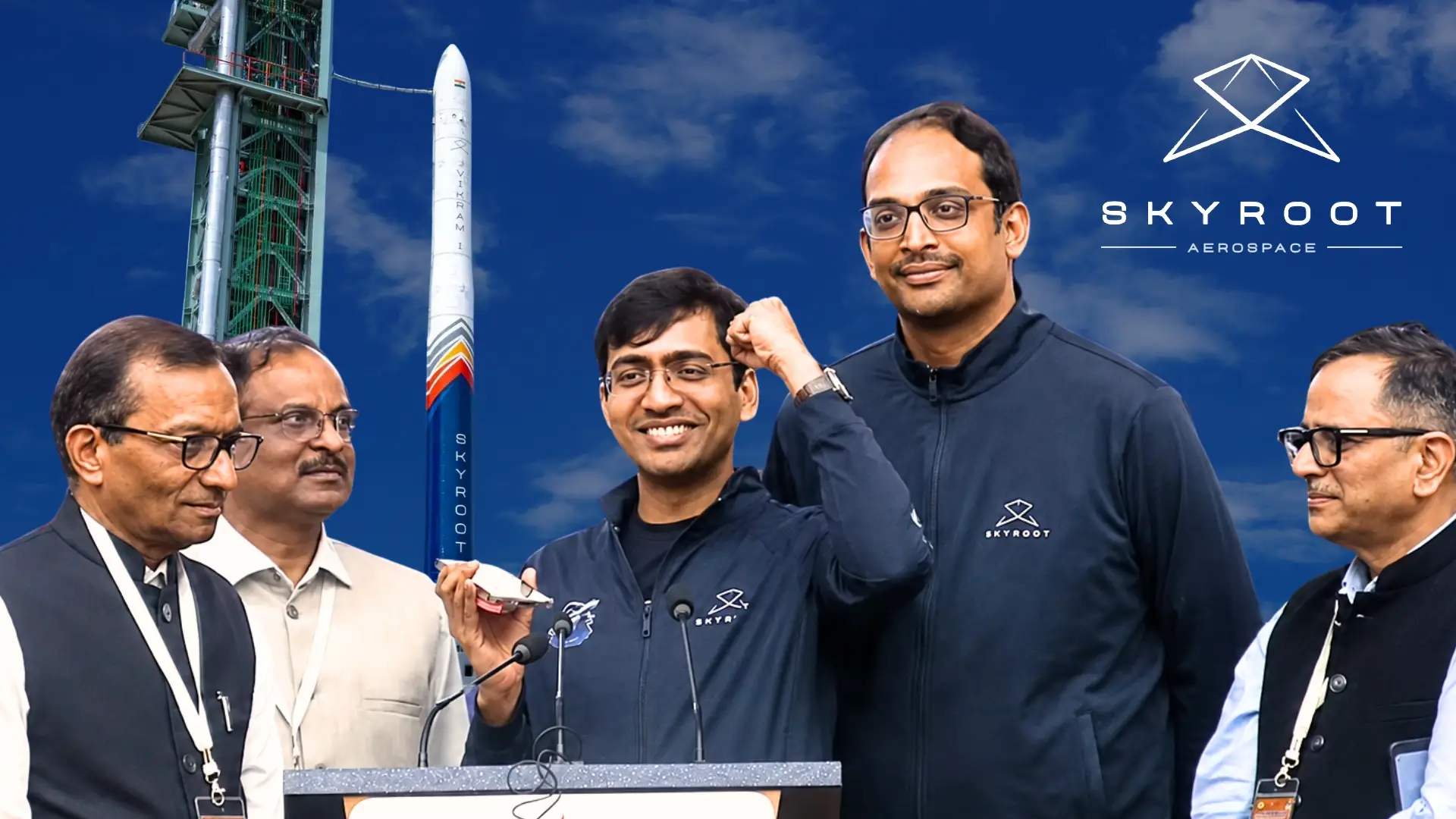
Skyroot’s Vikram-1 rocket has completed its maiden test flight, marking India’s first orbital-class launch attempt by a fully private company and a key milestone for the country’s commercial space sector.
Skyroot Aerospace, a Hyderabad-based space-tech startup, launched Vikram-1 on its Test Flight-1 mission, codenamed “Aagaman”, from the first launch pad at the Satish Dhawan Space Centre in Sriharikota. The launch took place in a window confirmed by the Indian Space Research Organisation’s (ISRO) spaceport and followed a formal campaign that included airspace and maritime restrictions along the rocket’s ascent corridor. The mission represents the first time an orbital-class rocket, designed and developed entirely by a private Indian firm, has attempted to fly from Indian soil.
Mission Aagaman was conceived as a technology demonstration flight rather than a full commercial deployment. According to Skyroot and public briefings, the primary goal was to validate the performance of Vikram-1 and its key systems in actual flight conditions, including propulsion, guidance and stage separation. The mission is targeting a low Earth orbit of about 450 kilometres at a 60-degree inclination, a regime suited to small satellite and technology demonstration payloads.
Vikram-1 is a multi-stage orbital launch vehicle designed to carry payloads of up to around 350 kilograms into low Earth orbit. The rocket is part of Skyroot’s Vikram family, which aims to address the growing demand for dedicated, flexible launch services for small satellites. The company has framed this first test flight as a critical step in qualifying the vehicle for future commercial missions, rather than a one-off demonstration.
The Aagaman mission carried multiple payloads from a range of space-tech firms. Technology demonstration payloads onboard included hardware from Grahaa Space, Cosmoserve, DCubed, and Skyroot’s own SCOPE platform, as well as micro-art and artwork payloads such as Cosmos Diamonds’ “Cosmic Bloom.” These payloads are intended to showcase in-orbit capabilities and to validate new technologies under real operational conditions.
For India’s nascent private launch sector, Vikram-1’s flight is a symbolic and practical breakthrough. It follows policy reforms that opened ISRO infrastructure and launch facilities to private companies, enabling startups like Skyroot to develop and test orbital-class vehicles. The mission underscores India’s ambition to build a competitive commercial launch ecosystem that complements ISRO’s own programmes and taps global demand for small satellite launches.
Skyroot’s attempt with Vikram-1 positions the company as one of the first movers in India’s private space industry, with potential implications for funding, partnerships and future launch cadence. If subsequent flights confirm consistent performance and reliability, Vikram-1 could emerge as a domestic option for small satellite operators seeking cost-efficient access to orbit from Indian soil. For now, Mission Aagaman sets a precedent by demonstrating that India’s private sector can take an orbital-class rocket from design and development to a full-scale test flight.
Read Article: India’s Unemployment Rate Stays at 5.5% in June Amid Urban Labour Market Pressures