
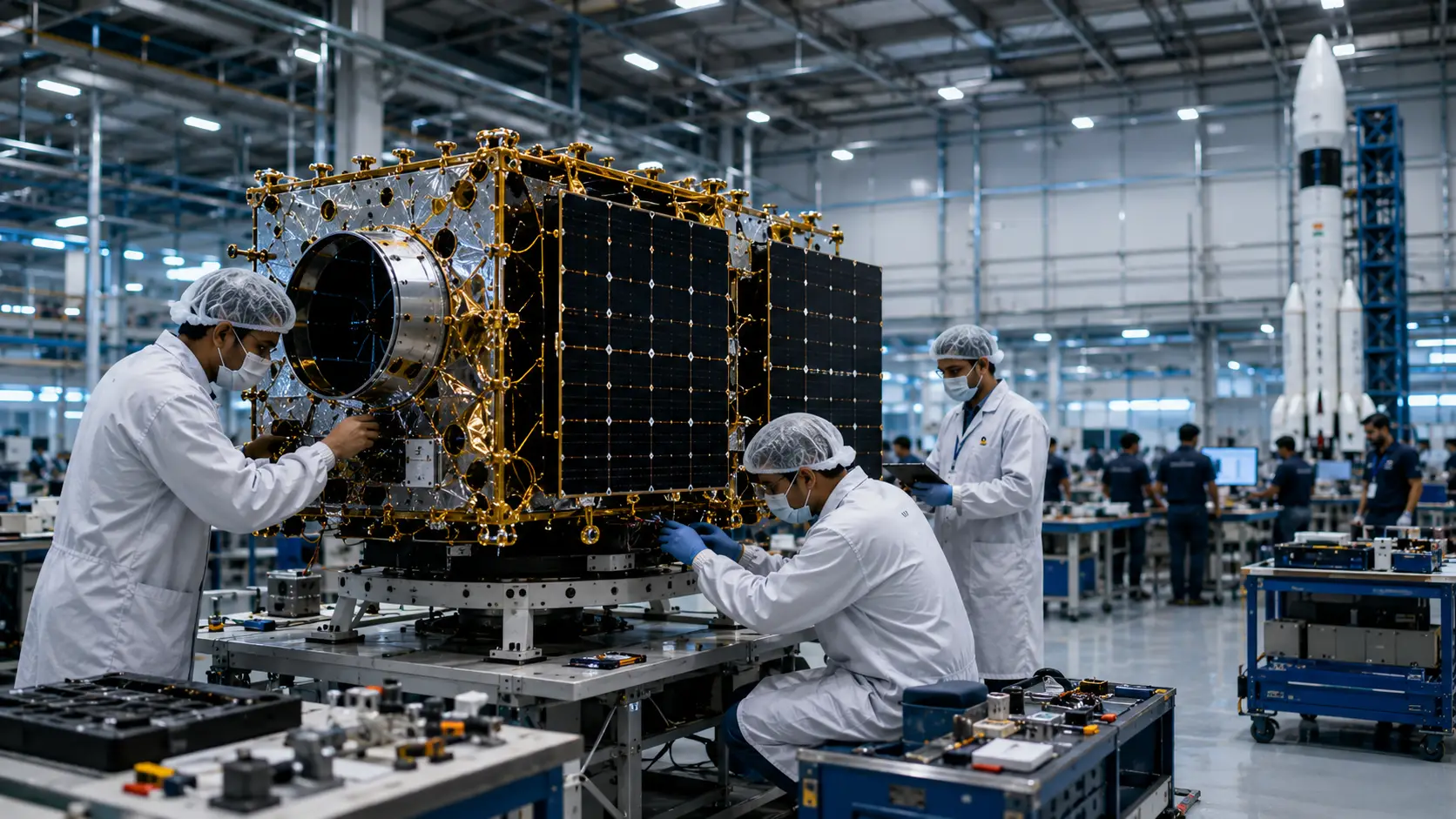
India’s private space industry has reached a new milestone, with the number of space startups growing from just one in 2014 to more than 400 in 2026. As private investment continues to rise, the government has also tightened the approval process for ISRO scientists seeking to resign or opt for voluntary retirement from critical national missions.
India’s space sector has expanded rapidly since it was opened to private participation in June 2020, creating new opportunities for startups and investors.
According to data shared by Union Minister Dr. Jitendra Singh in the Rajya Sabha on 23 July, the number of space startups has grown from just one in 2014 to more than 400 in 2026. The minister said cumulative private investment has reached US$618.5 million, while 105 authorisations have been issued to private space companies. Of this, US$187 million has been invested during 2026 so far.
The minister also said Skyroot Aerospace has become India’s first space-sector unicorn with backing from GIC and BlackRock, while Pixxel has attracted investment from Alphabet. Alongside the sector’s growth, the government has introduced stricter rules to retain scientific talent within the Indian Space Research Organisation (ISRO).
An internal memorandum issued by the Department of Space on 14 July directs ISRO centres, including the U R Rao Satellite Centre (URSC) and the Vikram Sarabhai Space Centre (VSSC), to stop routinely approving resignation and voluntary retirement requests from Group ‘A’ scientific and technical personnel working on Gaganyaan and other missions of national importance. All such requests must now be sent to the Department of Space for final approval, reversing a 2020 order that had delegated this authority to individual ISRO centre directors.
According to India Today, which first accessed the memorandum, the Department of Space said a “spate of requests” was “affecting the implementation of projects of national importance.”
According to media reports, more than 120 scientists have resigned or taken voluntary retirement from ISRO in recent months, including around 80 scientists from the U R Rao Satellite Centre (URSC) and at least 20 from the Vikram Sarabhai Space Centre (VSSC). A Parliamentary Committee report presented in March 2026 also noted that ISRO had more than 2,800 vacancies against a sanctioned strength of around 18,000 posts. Scientists who spoke to ThePrint attributed the departures to better salaries, stock options, and stronger career opportunities offered by private space companies.
The rapid growth of India’s private space industry has created new opportunities for innovation and investment, but it has also increased competition for experienced talent. The government’s latest measures reflect its effort to strengthen ISRO’s workforce while supporting the continued expansion of the country’s commercial space ecosystem.
Read Article: EU Fines Google €890 Million in Major DMA Ruling