
India won’t be second to anybody in developing foundational AI models: IT Secretary
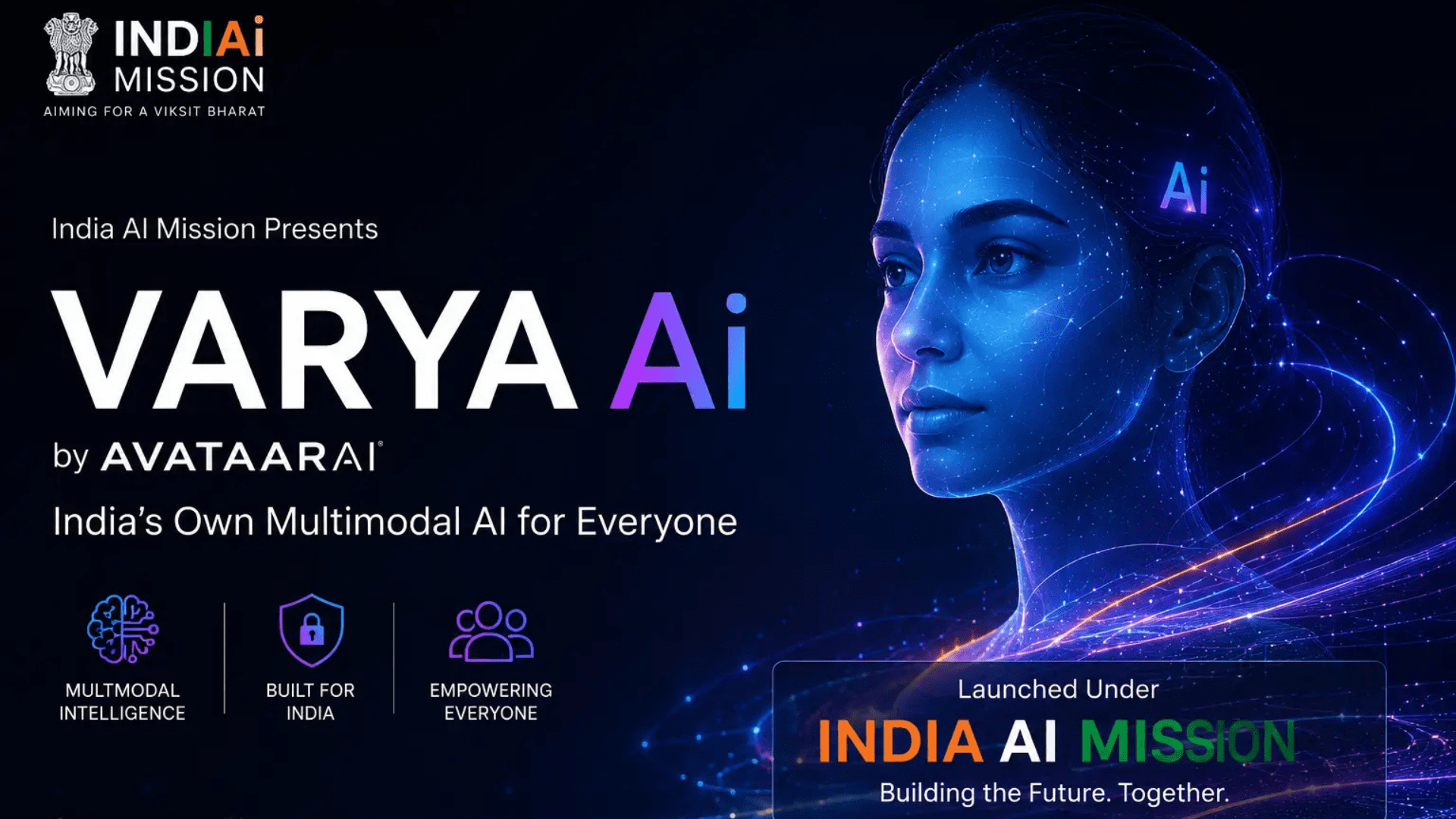
India’s push to build homegrown foundational AI models has taken a significant leap forward with the launch of Varya, an indigenous AI video generation model developed by Bengaluru-based startup Avataar.Ai under the IndiaAI Mission.
Electronics and IT Secretary S. Krishnan made it clear at the launch that Varya is not just a product it is a statement. For those who doubted India’s capacity to build advanced AI platforms, Varya serves as concrete proof that India can compete at the frontier level, not just in language models, but across diverse AI applications.
Unlike generic global models, Varya is built around India’s cultural specificity understanding regions, festivals, communities, food, clothing, and everyday life. It is designed to generate culturally rich visual outputs that reflect the real, layered diversity of India not a simplified or generalized version of it.
On the technical side, the numbers are striking:
· Built on 14 billion parameters
· Reduces video generation from 50 steps to just 4, making it 10x more efficient
· 27x faster and 27x cheaper than leading global models
· Users can generate a 211-second video for just ₹100
Perhaps the most important philosophical shift Varya represents is reframing affordability. Avataar CEO Sravanth Aluru argued that for a nation of 1.4 billion people, affordable AI is not optional it is foundational. Expensive AI tools, however powerful, will never unlock India’s true productivity potential. Varya is positioned as inclusive AI by design.
A critical but often overlooked angle is the role of subsidized national AI compute infrastructure provided by the IndiaAI Mission. Avataar’s selection under the mission gave it access to computing resources that would otherwise be prohibitively expensive for a startup. This highlights a broader policy lesson — public AI infrastructure can meaningfully accelerate homegrown innovation, reducing the gap between well-funded global players and emerging Indian startups.
The platform allows users to simply upload photos or raw videos and describe their desired output in writing removing technical barriers while preserving human creativity.
Varya signals that India’s AI ambition is no longer limited to consuming global models it is moving toward building efficient, context-aware, population-scale AI systems. The competitive edge India is carving is not about building the biggest model, but the most efficient and accessible one. This approach could serve as a replicable model for other developing economies seeking AI sovereignty without massive capital outlays.
Key questions going forward include how Varya scales adoption beyond early users, whether it can attract international interest as a cost-efficient alternative, and how the IndiaAI Mission plans to build on this momentum with future foundational model launches across other domains such as audio, healthcare, and agriculture.
Read Article: Tesla Expands India Footprint with New Experience Centre in Hyderabad