
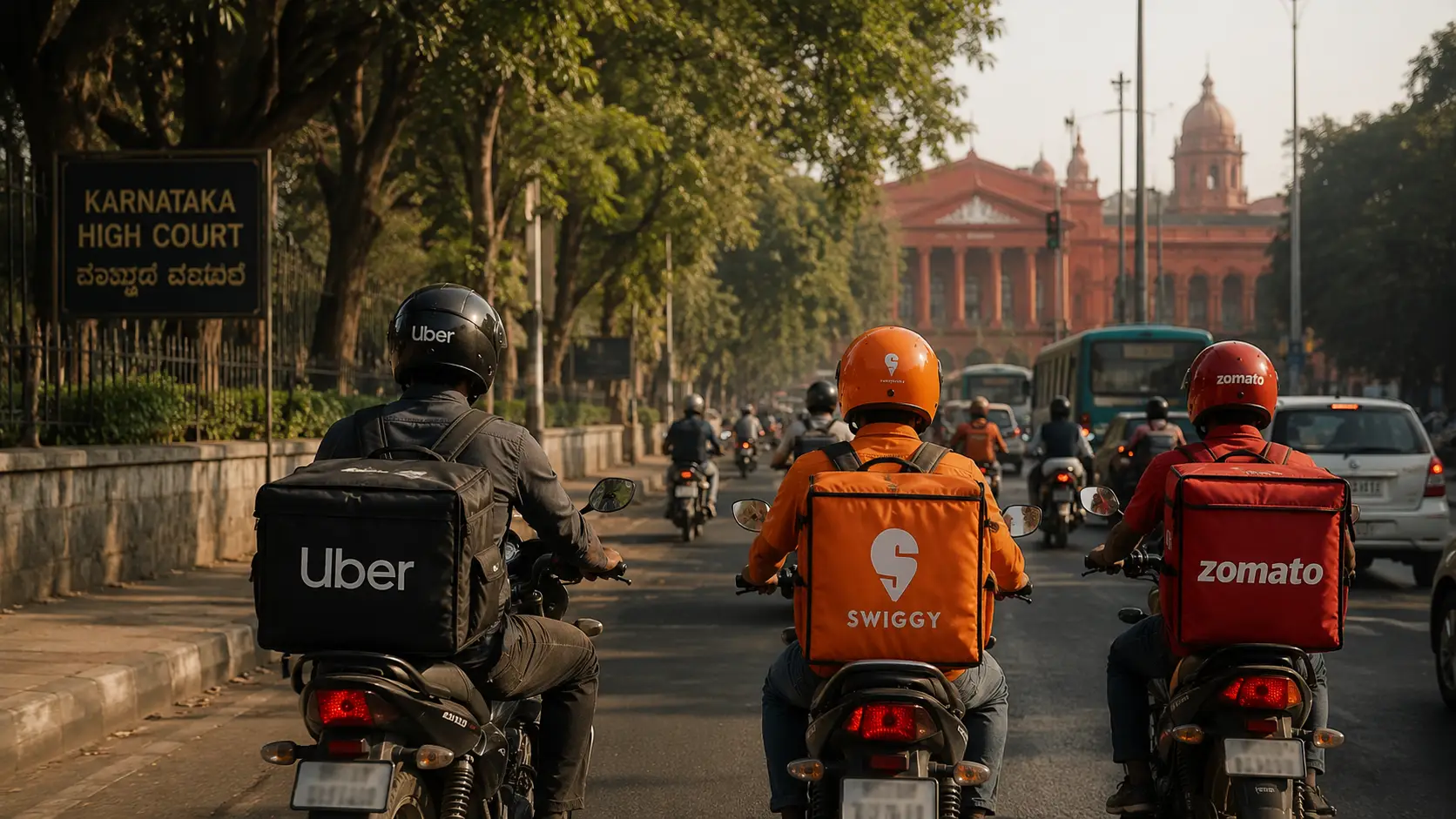
The Karnataka High Court has refused to suspend the Karnataka Platform-Based Gig Workers (Social Security and Welfare) Act, 2025, after petitions were filed by the Internet and Mobile Association of India (IAMAI) and several internet platforms, including Eternal (Zomato), Swiggy, Zepto, Urban Company and Meesho’s logistics arm, Valmo Transportation.
While refusing to stay the law, the court directed the companies to deposit the welfare contribution for the April–June quarter within three weeks. In return, they have been given interim protection from any coercive action under the Act. The Karnataka government has been asked to file its response by July 30, and the next hearing is scheduled for August 14.
According to a report by Bar and Bench, the petitioners argued that the state law creates a parallel regulatory system even though the Code on Social Security, 2020 (COSS), already provides a national framework for gig and platform workers. They have challenged the constitutional validity of the Act, saying it is arbitrary, violates Article 14 and infringes other fundamental rights.
The petition also challenges the government notifications that set up the Karnataka Platform-Based Gig Workers Welfare Board and the compliance notices issued under the Act. These include directions to set up Internal Dispute Resolution Committees (IDRCs), submit worker data, respond to show-cause notices and comply with welfare fee notices that require payment by July 5.
The Act was notified in September 2025, making Karnataka the first state in India to introduce a separate law for platform-based gig workers. It creates a welfare board and welfare fund, provides social security benefits, requires platforms to improve transparency and introduces a two-level grievance redressal system. It also says that platforms must give written reasons before terminating or deactivating a worker’s account, except in emergency situations.
According to the Karnataka government, around 12 aggregators have submitted details of nearly 12 lakh active gig workers. However, officials said duplicate registrations may exist until unique IDs are issued.
A major issue in the case is the welfare contribution introduced under the Act. In February 2026, the Karnataka government imposed a 1% welfare fee on platform aggregators for every transaction, with different per-transaction caps based on the type of service. Food and grocery delivery platforms will pay up to ₹0.50 per order, ride-hailing platforms up to ₹1 depending on the type of vehicle, logistics platforms between ₹0.50 and ₹1.50, and professional services platforms such as Urban Company up to ₹1.50 per transaction.
The welfare contribution will be collected for the first time on July 5 for transactions made during the April–June quarter. The money will be used to provide benefits such as life and accident insurance, disability cover, medical assistance, maternity benefits and old-age protection. The Act also requires platforms to file quarterly returns. Delayed payments can attract 12% annual interest, while repeated violations may lead to penalties of up to ₹1 lakh.
Read Article: India Moves to Tighten VPN Oversight Amid Rising Content Blocks and Privacy Concerns