
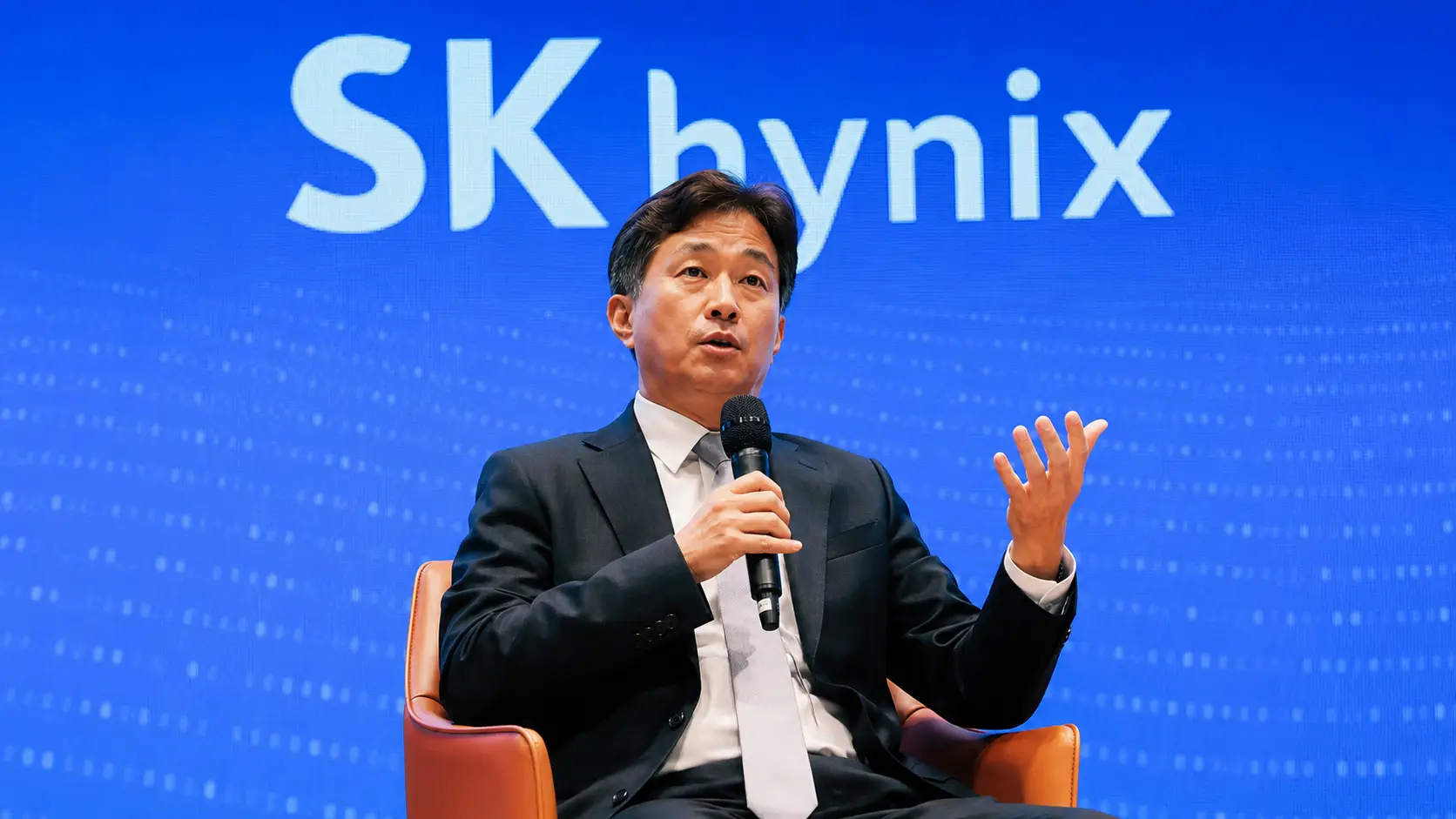
SK Hynix Chief Executive Kwak Noh-jung has warned that the global memory chip industry could face its biggest supply shortage in 2027. He said demand for memory chips is expected to remain higher than the company’s production capacity even beyond 2030, despite ongoing efforts to expand manufacturing.
The rapid growth of artificial intelligence is putting increasing pressure on the global memory chip industry, and SK Hynix believes the gap between demand and supply will continue for years.
SK Hynix CEO Kwak Noh-jung said the company expects 2027 to be the most difficult year for memory chip supply. He said customer demand continues to grow faster than the company’s production capacity and is expected to remain higher than its supply even beyond 2030.
“We forecast that next year will be the worst year in the industry’s history from the supply perspective,” Kwak said. “Our customer demand continues to go up, while our capacity has limitations. We still forecast that customer demand will remain higher than our supply capacity even beyond 2030. But we are doing our best to solve the problem.”
SK Hynix is one of the world’s leading manufacturers of High Bandwidth Memory (HBM), a type of memory used in Nvidia’s AI chipsets. As companies continue to invest heavily in AI infrastructure and data centres, demand for these advanced memory chips has grown rapidly, making SK Hynix a key supplier in the global AI supply chain.
The company is also looking at expanding its manufacturing footprint. Kwak said the United States is one of the locations being considered for a future wafer fabrication plant, although no final decision has been made. Japan and countries in Southeast Asia are also under consideration. He added that the company will choose a location based on factors such as the availability of land, electricity, water, skilled workers and competitive manufacturing costs.
In South Korea, SK Hynix is continuing to expand its manufacturing capacity. The company operates major production facilities in Icheon and Cheongju and is building a large semiconductor complex in Yongin. It is also working alongside Samsung Electronics as part of the South Korean government’s plan to increase the country’s memory chip production capacity over the next five years.
While some investors have raised concerns that spending on AI infrastructure could slow, many industry leaders continue to expect strong demand. Nvidia CEO Jensen Huang recently said shortages of AI memory are likely to continue for several years because demand remains high.
The AI boom has helped SK Hynix strengthen its position in the semiconductor industry. The company continues to invest in manufacturing and expansion projects as it prepares to meet growing long-term demand for advanced memory chips.
Read Article: OpenAI Launches ChatGPT Work as Desktop ‘Super App’ for Enterprise Tasks