
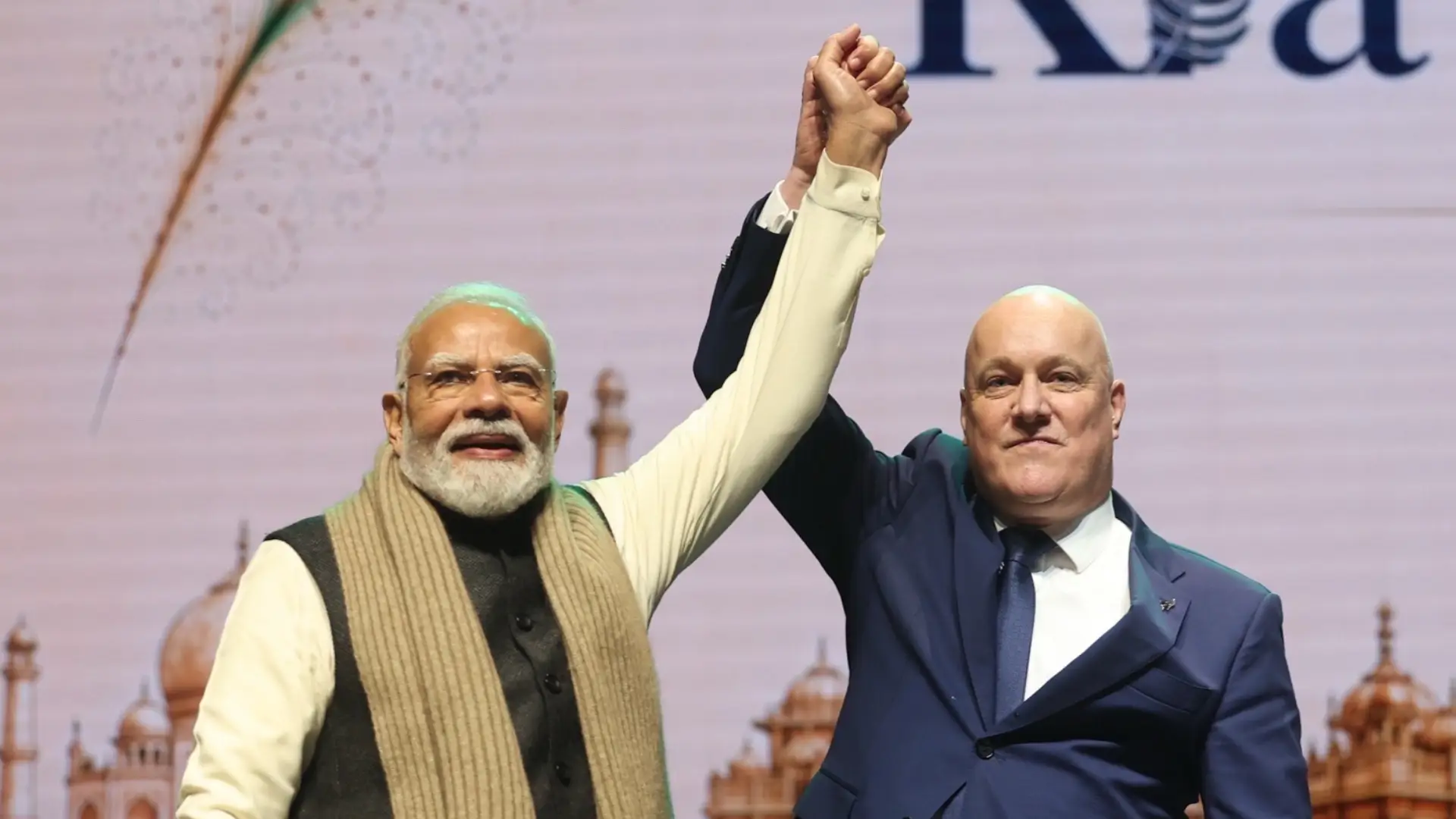
India and New Zealand have formally elevated their bilateral relationship to a strategic partnership, setting a goal of doubling annual trade in goods and services to around ₹35,000 crore by 2030. The upgrade follows talks between Prime Minister Narendra Modi and his New Zealand counterpart Christopher Luxon during Modi’s official visit to Auckland.
According to official statements and media reports, the two leaders announced 18 concrete outcomes, including 10 agreements that span defence cooperation, maritime security, trade, supply chains and regional engagement. Central to the new framework is the “India–New Zealand Strategic Partnership: Roadmap to 2030,” a four-year plan intended to guide implementation of commitments across ministries and agencies.
On the security side, both countries launched a Maritime Security Dialogue and concluded a reciprocal logistics support arrangement between the Indian Navy and the New Zealand Defence Force. They also agreed on a maritime cooperation pact under the existing defence framework, alongside arrangements to enhance hydrographic data sharing and nautical cartography. These measures are aimed at deepening coordination in the Indo-Pacific maritime domain.
Economic engagement is a central pillar of the strategic partnership. The two governments set an explicit target of raising bilateral trade to NZ$7 billion, or roughly ₹35,000 crore, by 2030 and linked this to the early implementation of the recently signed India–New Zealand Free Trade Agreement. Officials said trade expansion, investment, and supply chain resilience will be pursued within this framework over the coming years.
Beyond trade and security, the roadmap highlights cooperation in areas such as education, research, science, technology and innovation, which both sides described as key to the future trajectory of the relationship. The joint outcomes also include plans for a Joint Working Group on counter-terrorism and initiatives in sectors like agriculture, climate action, digital transformation and emerging technologies.
Indian and New Zealand officials framed the strategic partnership as part of a broader effort to support a stable, rules-based order in the Indo-Pacific. With structured mechanisms now in place across defence, trade and people-to-people ties, the two governments signalled that the next four years will test how quickly the new roadmap can translate into tangible economic and security gains.
Read Article: India-UK Free Trade Pact Takes Effect July 15, Opening Duty-Free Access for Most Indian Exports