
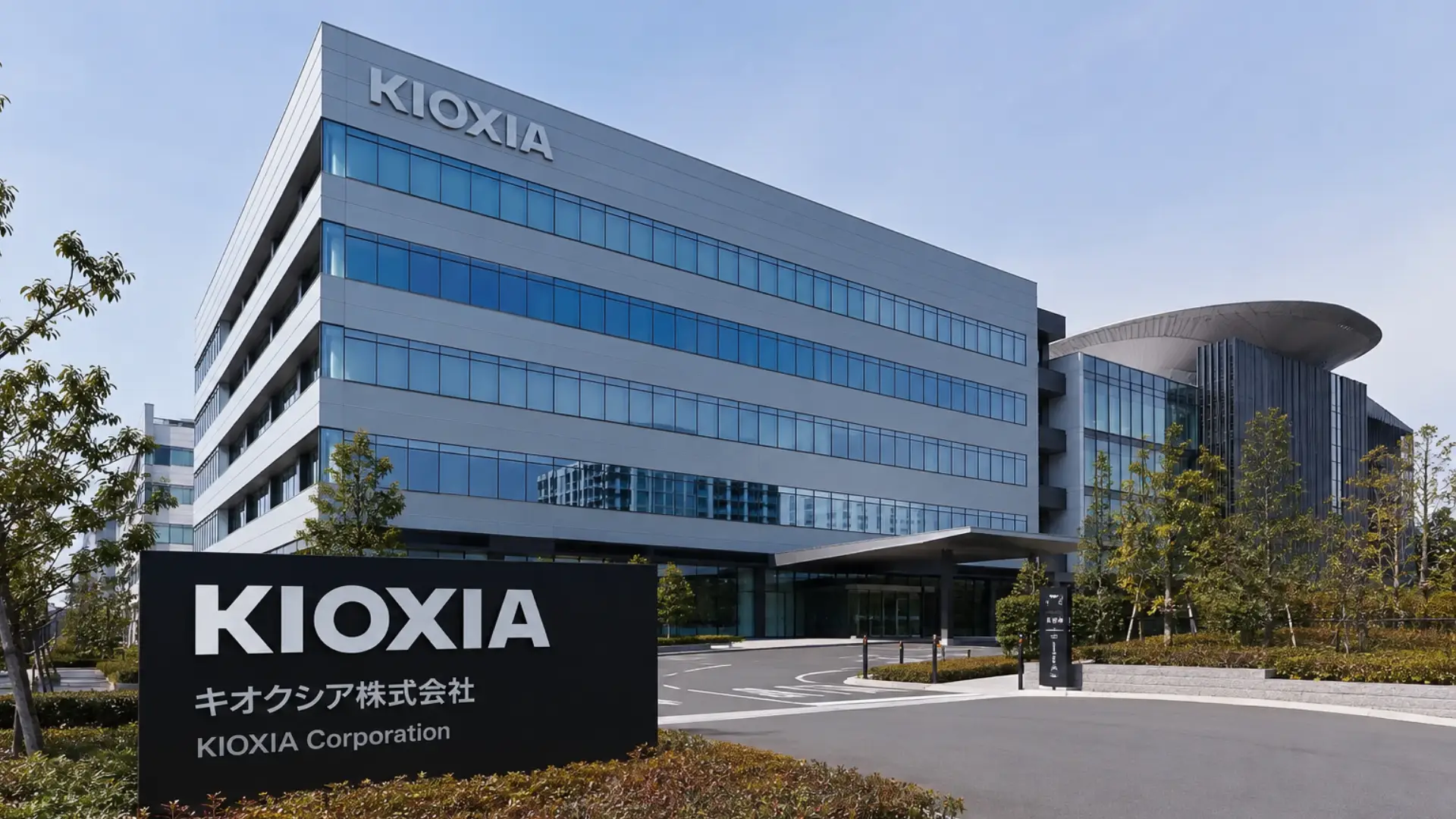
Kioxia Holdings is moving ahead with the mass production of its 10th-generation BiCS Flash memory as demand for AI infrastructure continues to boost the Japanese memory chipmaker’s market value. The company will hold a ceremony on Friday at its Kitakami manufacturing facility in Iwate Prefecture to mark the start of preparations for large-scale production of its latest NAND flash memory.
The move comes after Kioxia’s shares surged more than sevenfold this year, lifting the company’s market capitalization above $250 billion. Reuters reported that Kioxia briefly surpassed Toyota Motor in market value, highlighting growing investor interest in companies supplying critical components for AI infrastructure.
Demand for NAND flash memory has increased as AI workloads expand beyond model training to inference, requiring larger amounts of high-capacity storage in data centers and AI systems. This shift has strengthened demand for advanced memory products used in enterprise AI deployments.
The 10th-generation BiCS Flash technology has been developed jointly with SanDisk and will be manufactured at Kioxia’s Kitakami fab, one of the company’s most advanced production facilities. The new generation is expected to support the increasing storage requirements of AI applications while improving performance and manufacturing efficiency.
Kioxia has continued to expand its BiCS Flash technology roadmap as memory demand grows alongside global investment in AI infrastructure. The company’s latest production milestone reflects its efforts to increase manufacturing capacity and strengthen its position in the NAND flash memory market.
The production expansion comes amid continued investment across the semiconductor industry as technology companies build AI data centers and deploy larger-scale AI systems, driving demand for advanced memory solutions that support both training and inference workloads.
Read Article: Microsoft Launches Frontier Company, Invests $2.5 Billion to Scale Enterprise AI Adoption