
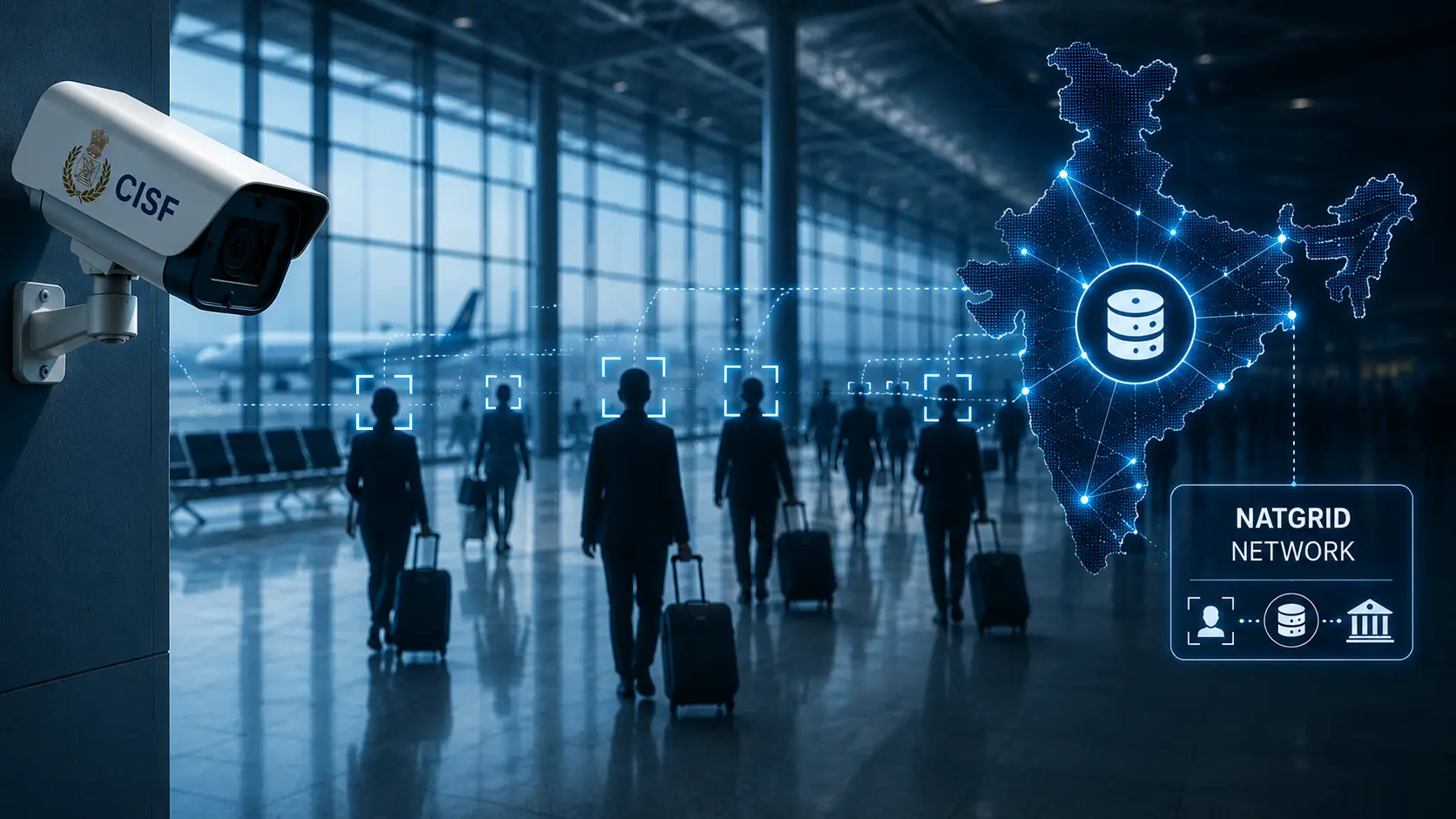
The Central Industrial Security Force (CISF) has proposed installing facial recognition cameras at major airports across India and linking them to a central security network connected with national databases. The move aims to help identify suspects and fugitives in real time and strengthen airport security monitoring.
The Central Industrial Security Force (CISF) has proposed installing facial recognition cameras at major airports across the country to help identify fugitives and suspects using government databases.
CISF Director General Praveer Ranjan announced the proposal on June 22 during the foundation-laying ceremony of the force’s new headquarters in Delhi. The cameras will be linked to a Data Fusion Centre proposed in Delhi and integrated with an Integrated Command and Control Centre (ICCC). The system will also receive feeds from nearly 1.5 lakh cameras installed at locations under CISF security cover.
The facial recognition technology is expected to be introduced first at six major airports — Delhi, Bengaluru, Chennai, Mumbai, Hyderabad and Kolkata. According to CISF officials, the collected data will be matched with records available through the National Intelligence Grid (NATGRID) to improve real-time monitoring, identify suspects and support law enforcement agencies.
NATGRID is a government intelligence-sharing platform that allows authorised agencies to access information from multiple databases, including Aadhaar records, vehicle registrations, airline records, bank records, FASTag data, passport details and travel information.
A CISF officer told Hindustan Times that the technology will be installed only at key locations such as airport entry and exit points where suspects are likely to pass through. The cameras have not yet been installed.
India already operates the National Automated Facial Recognition System (AFRS), managed by the National Crime Records Bureau (NCRB), which is used to track criminals, identify deceased persons and locate missing individuals.
The proposal comes as India continues to expand the use of facial recognition technology in security and policing. However, such systems have also raised concerns around privacy and surveillance in the past. The report noted that Delhi Police had previously used facial recognition technology during investigations related to the 2019 Delhi riots, drawing criticism from digital rights groups.
Read Article: Tata Electronics Confirms Cyberattack After Leak of Alleged Apple, Tesla Files